

A colocation data center is a facility where businesses place their own servers and networking equipment while a third-party provider supplies the building infrastructure, such as power, cooling, physical security, and network access. The business keeps control of its hardware, and the facility provides the space and supporting systems that keep it running. At ColoCapacity, we help organizations explore and compare colocation facilities around the world.
What a colocation data center provides
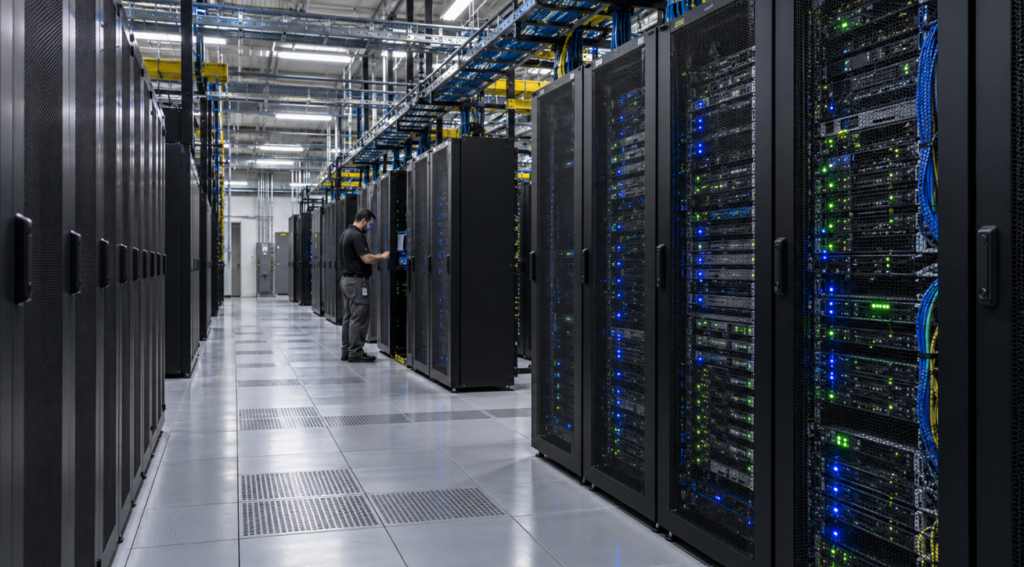
A colocation facility houses IT equipment in a controlled environment built to support continuous operation. Customers typically lease space in a cabinet, rack, cage, or larger area, depending on their equipment and capacity needs.
The facility’s infrastructure may include:
- Electrical power and backup systems
- Cooling systems that remove heat from equipment
- Physical access controls and monitoring
- Network connections and carrier access
- On-site technical support, depending on the provider and service agreement
These details vary by facility. For example, one site may offer a particular amount of power per cabinet, while another may support different cooling methods or network providers. The U.S. Department of Energy’s data center design guide explains how IT equipment, electrical systems, cooling, and air management work together in data center operations.
How colocation works
The customer selects a facility and agrees on the space, power, connectivity, and support it needs. Then the customer’s team installs or arranges the installation of its servers and other equipment.
Once the equipment is in place, the customer manages the hardware and software. That usually includes configuring servers, maintaining operating systems, managing applications, and planning backups. The facility operator manages the building systems that support the equipment.
For example, a company might place its database servers and network switches in a data center cabinet. The company’s IT team controls those devices remotely, while the facility supplies power and cooling and restricts physical access to the equipment. If the company needs a technician to check a cable or restart a device, the facility may provide remote hands service. The exact tasks and fees depend on the provider.
Who owns the equipment?
In a typical colocation arrangement, the customer owns the servers, storage, and networking equipment. The facility provider owns or operates the building and its supporting infrastructure.
That division gives the customer direct control over hardware choices and configurations. It also means the customer remains responsible for the equipment itself, including purchasing, installing, maintaining, and replacing it. Some providers offer additional services, but customers should confirm what each service includes in the agreement.
Colocation differs from renting a complete managed IT environment. A facility can supply the space and infrastructure without taking responsibility for running a customer’s applications or managing its servers.
What does a business pay for?
Colocation pricing depends on the facility and the customer’s requirements. Common cost factors include the amount of rack or cabinet space, power needs, connectivity, location, and any additional support services.
When comparing quotes, check what the quoted power figure means. It might refer to a limit on power available to your equipment, metered consumption, or another arrangement. Ask how the provider bills power and whether installation, cross-connects, or remote hands tasks carry separate charges.
A useful request includes the equipment type and quantity, expected power draw, preferred locations, network needs, and any support requirements. ColoCapacity’s colocation service page explains the service and common factors that affect facility selection. You can also browse colocation facilities to explore available sites and their listed capabilities.
Why businesses use colocation
Businesses often consider colocation when they want to keep control of physical hardware without operating their own data center. Running an in-house facility requires a suitable space and the infrastructure to support power, cooling, security, and connectivity. Colocation lets a business place equipment in a facility built for that purpose.
The arrangement can also suit organizations with specific hardware requirements or infrastructure already in use. A business can keep its chosen servers and network equipment while evaluating facilities based on location, available power, connectivity, and other requirements.
Colocation doesn’t remove the need to plan for reliability. Customers still need to understand the facility’s power design, service terms, support process, and the steps their own team will take during an outage or maintenance event.
When colocation may be a good fit
Colocation may fit a business that:
- Needs to keep using physical servers it owns
- Wants dedicated control over hardware configuration
- Needs to place infrastructure in a particular market
- Has staff or a support arrangement to manage its equipment
- Needs to compare facilities for power, connectivity, or space requirements
It may be less suitable for a team that expects the facility to manage all IT operations as part of the basic space agreement. Before committing, clarify which responsibilities belong to the customer and which belong to the provider.
What to check before choosing a facility
Start with the equipment plan. Record the rack count, dimensions, weight, expected and maximum power draw, cooling needs, network requirements, and preferred deployment date. Then confirm that each candidate facility can support those requirements at the cabinet or room level.
Ask practical questions, such as:
- How much power can the facility deliver to each cabinet?
- What cooling methods and capacity does it support?
- Which carriers or network connections are available?
- What physical access rules apply to customers and vendors?
- What does remote hands service cover, and how is it billed?
- What are the contract terms for power, support, and service availability?
Review the written service agreement alongside any facility overview. A listing can help narrow your options, but facility-specific details and contract terms determine what the provider will deliver for your deployment.
Explore colocation options with ColoCapacity
A colocation data center gives businesses a place to house equipment while a facility provider supplies the supporting infrastructure. The right setup depends on the hardware, power, cooling, connectivity, location, and support the business needs.
At ColoCapacity, our platform lets businesses research providers, facilities, and regions worldwide. If you have a deployment in mind, request a custom quote with your equipment and infrastructure requirements so you can compare relevant options.